Embarking on an African safari Tanzania journey means stepping into one of the planet’s most extraordinary natural theaters. Tanzania has earned its reputation as Africa’s premier safari destination through decades of dedicated conservation, exceptional wildlife management, and an unwavering commitment to preserving pristine wilderness. For travelers seeking authentic encounters with Africa’s iconic wildlife, Tanzania offers experiences that exceed imagination and create lifelong memories.
The allure of African safari Tanzania extends beyond mere animal sightings. This East African jewel presents a tapestry of ecosystems where nature’s rhythms continue uninterrupted, where predator and prey engage in timeless dances of survival, and where landscapes shift from golden grasslands to volcanic highlands. Every moment spent in Tanzania’s wilderness reveals something new, whether it’s a leopard descending from a tree with its kill, elephants gathering at sunset waterholes, or millions of wildebeest thundering across the plains.
Why African Safari Tanzania Stands Above the Rest
Tanzania distinguishes itself among safari destinations through sheer scale and commitment to wildlife preservation. The country has designated approximately 40% of its total land area for conservation purposes, creating an interconnected network of national parks, game reserves, and conservation areas that rank among the world’s most significant protected wilderness zones. This extraordinary dedication ensures that African safari Tanzania experiences remain authentic, with minimal human interference disrupting natural behaviors and migration patterns.
The diversity available within Tanzania’s borders is staggering. Within a single trip, travelers can explore endless grasslands where cheetahs sprint after Thomson’s gazelles, witness hippos lounging in river pools, track elephants through acacia woodlands, and observe lions lazing on granite outcrops. This variety means that no two African safari Tanzania experiences are identical, with each game drive, each season, and each location offering distinct wildlife encounters and photographic opportunities.
Professional expertise represents another advantage distinguishing African safari Tanzania operations. Guides undergo rigorous training programs combining scientific knowledge about ecosystems, animal behavior, and conservation with practical tracking skills accumulated through years of field experience. These professionals transform simple wildlife viewing into educational journeys, sharing insights about the intricate relationships sustaining these ecosystems while anticipating animal movements to position clients for optimal viewing.
Serengeti National Park: The Ultimate Safari Destination
The Serengeti stands as the crown jewel of African safari Tanzania destinations, embodying everything travelers envision when dreaming of African wilderness. This vast expanse covers approximately 14,750 square kilometers of mostly grassland plains, though the ecosystem encompasses diverse habitats including riverine forests, rocky kopjes, and seasonal swamps. The park’s name perfectly captures its essence—”Siringet” in the Maasai language translates to “the place where the land runs on forever.”
What makes the Serengeti central to African safari Tanzania is the sheer abundance of life it supports. The park hosts the world’s largest populations of lions, with estimates suggesting over 3,000 individuals roam these plains. Leopards lurk in the kopjes and riverine thickets, cheetahs patrol the open grasslands seeking vulnerable prey, and spotted hyena clans patrol their territories. Beyond predators, enormous herds of zebras, giraffes, buffaloes, and various antelope species create constant wildlife viewing opportunities regardless of migration timing.
The park’s regions offer specialized experiences for African safari Tanzania enthusiasts. The Seronera Valley, located centrally, provides year-round predator viewing as resident prides and leopards remain in these territories continuously. The Southern Plains explode with life during the wet season when the Great Migration herds congregate for calving. The Western Corridor features the Grumeti River with its massive crocodiles waiting for migration crossings. The remote Northern Serengeti offers wilderness solitude combined with spectacular river crossing drama from August through October.
Witnessing the Great Migration Spectacle
No aspect of African safari Tanzania captures imagination quite like the Great Migration. This annual movement involves over 1.5 million wildebeest, 200,000 zebras, and 400,000 gazelles following ancient instincts that compel them to track seasonal rains and fresh grass across the Serengeti-Mara ecosystem. The migration never stops—it’s a continuous circular movement spanning twelve months, with different dramatic phases occurring throughout the year.
Understanding migration timing enhances African safari Tanzania planning significantly. January through March sees the herds concentrated in the southern Serengeti plains, where the mineral-rich volcanic soil produces nutritious short grass perfect for nursing mothers. This period witnesses the incredible calving season, when approximately half a million calves are born within a concentrated three-week window. The abundance of vulnerable young attracts every predator in the region, creating intense wildlife drama.
As the southern plains dry around April, the herds begin moving northwest toward the Western Corridor, typically arriving by May or June. Here, they face their first major obstacle—the Grumeti River. While smaller than the Mara River crossings, these passages offer fewer crowds for African safari Tanzania travelers. By July, the migration pushes further north, reaching the Mara River where the most famous crossings occur. The chaos of thousands of animals plunging into crocodile-filled waters, driven by necessity despite obvious danger, creates the ultimate wildlife spectacle.
Ngorongoro Crater: A World Within a World
The Ngorongoro Conservation Area represents a completely different dimension of African safari Tanzania experiences. The crater formed approximately 2.5 million years ago when a massive volcano, possibly as tall as Mount Kilimanjaro, exploded and collapsed upon itself. The resulting caldera creates a natural enclosure approximately 260 square kilometers in area and surrounded by walls rising 600 meters high.
This unique geography creates what many consider the world’s most spectacular wildlife viewing arena. The crater floor supports approximately 25,000 to 30,000 animals, creating remarkable wildlife densities. An African safari Tanzania visit to Ngorongoro almost guarantees Big Five sightings within a single day—lions, leopards, elephants, buffaloes, and the critically endangered black rhinoceros all inhabit this confined ecosystem.
The crater’s self-contained nature means animals rarely migrate in or out, creating resident populations that guides know intimately. Lion prides control specific territories, individual elephants become recognizable characters, and the same buffalo herds patrol particular sections. This familiarity allows guides to locate specific animals reliably, enhancing African safari Tanzania experiences for travelers with limited time.
Beyond wildlife, Ngorongoro offers dramatic scenery. The crater rim, often shrouded in morning mist, provides breathtaking viewpoints overlooking the entire caldera. The descent road winds through montane forests where elephants browse and colobus monkeys leap between branches. The crater floor itself encompasses diverse habitats—open grasslands, acacia woodlands, freshwater swamps, and Lake Magadi’s caustic waters that attract flamingos and other water birds.
Tarangire: The Elephant Haven
Tarangire National Park deserves recognition as one of African safari Tanzania’s hidden treasures. While smaller and less famous than the Serengeti, Tarangire offers wildlife experiences rivaling any park on the continent, particularly during the dry season from June through October. The permanent Tarangire River becomes a critical water source as surrounding areas desiccate, attracting enormous wildlife concentrations.
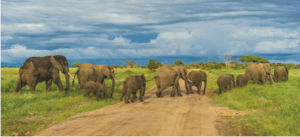
Tarangire’s elephant populations are legendary. During peak dry months, herds numbering several hundred individuals congregate along the river, creating scenes that define African safari Tanzania elephant viewing. These gentle giants can be observed bathing, drinking, playing, and engaging in complex social interactions. Tarangire’s elephants often appear more relaxed and approachable than populations in busier parks, allowing intimate observations and exceptional photography opportunities.
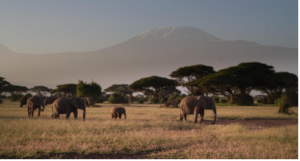
The park’s landscape distinguishes it visually from other northern circuit destinations. Giant baobab trees, some estimated at over 3,000 years old, dominate the terrain. These peculiar trees with their massive trunks and stubby branches create Africa’s most recognizable silhouettes. The combination of elephants, baobabs, and golden grasslands produces quintessential African safari Tanzania imagery.
Wildlife diversity extends well beyond elephants. Tarangire supports healthy populations of lions, leopards, cheetahs, and spotted hyenas. The park has become known for African wild dog sightings, though these endangered predators remain highly mobile and sightings require luck. The park’s bird diversity impresses ornithologists, with over 550 species recorded including numerous endemics and migrants.
Lake Manyara: Compact Paradise
Lake Manyara National Park proves that African safari Tanzania quality doesn’t correlate with size. This relatively small park, extending along the Great Rift Valley escarpment’s base, concentrates remarkable biodiversity into an accessible area. The shallow alkaline lake occupying much of the park’s area creates a magnet for water birds, with flamingos often forming massive flocks that paint the water pink.
The park achieved international fame through research on its tree-climbing lions. While the exact reasons remain debated—theories range from escaping biting flies to gaining better vantage points—Manyara’s lions regularly ascend into acacia branches. Spotting these magnificent predators lounging in trees creates memorable African safari Tanzania moments, though patience is often required as not all lions exhibit this behavior and sightings are never guaranteed.
The groundwater forest near the park entrance creates lush habitat contrasting sharply with the surrounding arid landscapes. This forest supports large baboon troops, blue monkeys, and diverse bird species. The transition from forest to acacia woodland to open grassland and finally to the lake edge creates distinct ecological zones, each supporting different species communities.
Exploring Tanzania’s Southern Wilderness
While northern parks dominate African safari Tanzania marketing and most itineraries, the southern circuit offers equally remarkable experiences with significant advantages. Nyerere National Park (formerly Selous Game Reserve) sprawls across 30,000 square kilometers, making it among Africa’s largest protected areas. The Rufiji River system creates a wetland paradise supporting exceptional wildlife populations in landscapes that remain genuinely wild.
Nyerere distinguishes itself through activity diversity unavailable in northern parks. Boat safaris along the Rufiji River provide unique perspectives on wildlife behavior, particularly for observing hippos, crocodiles, elephants coming to drink, and countless bird species. Walking safaris accompanied by armed rangers offer African safari Tanzania’s most intimate wilderness experiences, focusing on tracking animals, reading signs, and understanding ecological relationships invisible from vehicles.
Ruaha National Park, Tanzania’s largest national park at over 20,000 square kilometers, remains relatively undiscovered despite hosting extraordinary wildlife concentrations. The Great Ruaha River creates the park’s lifeline, supporting large populations during the dry season. Ruaha protects Tanzania’s largest elephant population and impressive numbers of lions, leopards, cheetahs, and endangered African wild dogs.
Planning Your Perfect African Safari Tanzania
Creating an optimal African safari Tanzania experience requires addressing multiple variables. Season selection significantly impacts what you’ll experience. The dry season from June through October provides classic safari conditions—wildlife congregates around remaining water sources, thinning vegetation improves visibility, and roads remain accessible. This period represents peak season with corresponding higher costs and increased tourist numbers.
The wet season, divided into short rains (November-December) and long rains (March-May), offers distinct advantages often overlooked. Rates drop significantly, tourist numbers decrease dramatically, and the landscape transforms into lush green paradise. Wildlife viewing shifts from concentrated masses at waterholes to dispersed populations across rejuvenated grasslands. Predator viewing often improves as prey animals give birth. Bird watching reaches its peak with resident species displaying breeding plumage and migrants arriving from Eurasia.
Budget planning for African safari Tanzania spans an enormous spectrum. Budget-conscious travelers can experience safari through camping options starting around $150-250 per person daily. Mid-range lodges and tented camps offer comfortable experiences at $300-600 daily. Luxury and ultra-luxury properties provide exceptional service, exclusive locations, and premium amenities at $700-2,500+ daily. Understanding what’s included in quoted rates—park fees, meals, beverages, activities—is essential for accurate comparisons.
Accommodation Options for Every Traveler
African safari Tanzania accommodation has evolved dramatically, now catering to every preference and budget level. Public campsites offer the most economical option for adventurous travelers willing to bring or rent equipment and handle their own logistics. Private mobile camps provide step-up comfort with professional staff handling setup, meals, and camp management while following wildlife concentrations.
Permanent tented camps represent the quintessential African safari Tanzania accommodation style. These camps feature canvas structures on raised wooden platforms, combining authenticity with comfort. Ensuite bathrooms, comfortable beds, private verandas, and attentive service create memorable bush experiences. Many tented camps occupy exclusive locations where wildlife frequently passes through, creating intimate connections with nature.
Luxury lodges elevate African safari Tanzania to the highest levels. These properties feature architectural distinction, gourmet cuisine, extensive wine cellars, infinity pools overlooking wilderness, and exceptional service standards. Many offer private game drives, specialized guides, and exclusive concession areas where visitor numbers are strictly controlled. Ultra-luxury properties add private plunge pools, butler service, and bespoke experiences including hot air balloon flights and bush dining.
Maximizing Your Wildlife Encounters
Success during African safari Tanzania adventures depends significantly on preparation and approach. Understanding animal behavior patterns enhances sighting opportunities considerably. Most mammals are most active during early morning and late afternoon when temperatures moderate. Midday often sees animals resting in shade, though this period can be productive for finding predators and photographing birds.
Patience often yields better results than constantly moving between sightings. Spending extended time with animal groups allows observing natural behaviors that rushed visits miss. Lions rousing from sleep and beginning to interact, elephants engaging in complex social rituals, or cheetahs surveying for prey all require time to unfold.
Communication with your guide enhances experiences significantly. Sharing specific interests—whether predators, birds, plants, or behaviors—allows guides to tailor drives accordingly. Don’t hesitate to request spending more time with particular animals or returning to promising locations. Quality guides appreciate engaged clients who ask questions and show genuine interest.
Cultural Enrichment Through Maasai Encounters
African safari Tanzania increasingly incorporates cultural dimensions that enrich overall experiences. The Maasai people inhabit lands surrounding many northern parks, maintaining semi-nomadic pastoral traditions despite modern pressures. Responsible cultural visits provide insights into Maasai life, including their distinctive dress, warrior traditions, unique jumping dances, intricate beadwork, and complex age-set social structures.
These encounters provide valuable context for understanding conservation challenges and successes. The Maasai traditionally coexisted with wildlife, and their grazing practices shaped ecosystems that animals now depend upon. However, modernization, population growth, and land subdivision create increasing conflicts between traditional lifestyles and conservation requirements. Understanding these complexities adds depth to African safari Tanzania experiences beyond simple wildlife viewing.
Conservation’s Critical Role
African safari Tanzania plays an irreplaceable role in conservation financing and community development. Park entrance fees, concession payments, and tourism employment create powerful economic incentives for wildlife protection. Tanzania has pioneered conservation models that integrate local communities, recognizing that sustainable protection requires local buy-in and equitable benefit sharing.
Travelers can maximize their conservation impact by choosing operators demonstrating genuine sustainability commitments. This includes minimizing environmental footprints through solar power and water conservation, supporting anti-poaching operations, employing local staff at fair wages, and contributing to community development projects. Many lodges operate schools, medical clinics, or water projects that benefit neighboring communities.
The choice of when to visit also impacts conservation. Traveling during shoulder or low seasons helps distribute tourism benefits more evenly throughout the year, supporting year-round employment and reducing environmental stress during peak periods. While everyone wants optimal wildlife viewing, off-season travelers often enjoy more personal experiences while supporting conservation through leaner months.
Conclusion
African safari Tanzania represents one of travel’s most transformative experiences, connecting visitors with wild nature in its most authentic and powerful form. Tanzania’s extraordinary wildlife populations, diverse ecosystems, professional infrastructure, and unwavering conservation commitment combine to create safari experiences that remain unmatched anywhere on Earth. Whether watching the Great Migration’s thundering herds, observing elephants against backdrops of ancient baobabs, witnessing predators hunting across golden grasslands, or simply absorbing the profound peace of pristine wilderness, African safari Tanzania delivers moments that transcend ordinary travel.
These experiences carry significance beyond personal enrichment. Every African safari Tanzania journey supports conservation efforts protecting irreplaceable ecosystems and the species that depend upon them. Tourism revenue funds anti-poaching operations, habitat protection, and community development programs that give local people tangible reasons to value wildlife. Visitors become ambassadors for conservation, returning home with deeper understanding of nature’s complexity and humanity’s responsibility to preserve Earth’s remaining wild places.
The magic of African safari Tanzania lies not just in witnessing charismatic megafauna but in experiencing ecosystems where natural processes continue with minimal human interference. It’s hearing lions roar at dawn, watching storms sweep across endless plains, and recognizing our place within the larger community of life. Tanzania’s wilderness offers gifts beyond measure—gifts of wonder, humility, and renewed commitment to preserving our shared natural heritage for generations yet to come.
Key Takeaways
Unmatched Wildlife Abundance: African safari Tanzania provides access to the world’s most impressive wildlife concentrations, including the Great Migration, dense Big Five populations, and over 25% of Africa’s large mammal species within varied ecosystems.
Ecosystem Diversity: From the endless Serengeti plains to Ngorongoro’s volcanic crater, from elephant-filled Tarangire to remote southern wilderness, African safari Tanzania encompasses extraordinary landscape variety within manageable travel distances.
Year-Round Destination: While the dry season offers concentrated wildlife viewing, every season provides unique African safari Tanzania advantages, from calving season drama to green season’s lush beauty and significant cost savings.
Flexible Budget Options: African safari Tanzania accommodates all financial situations, from budget camping at $150 daily to ultra-luxury lodges exceeding $2,000 daily, ensuring accessibility without compromising authentic wilderness experiences.
Professional Excellence: Decades of safari industry development mean African safari Tanzania features highly trained guides, reliable logistics, comprehensive safety protocols, and service standards matching international expectations while maintaining local authenticity.
Conservation Leadership: Tanzania’s commitment to protecting 40% of its territory creates sustainable African safari Tanzania experiences while supporting critical conservation programs and community development initiatives that benefit both wildlife and people.
Beyond Game Drives: Modern African safari Tanzania encompasses walking safaris, boat excursions, hot air balloon flights, night drives, and cultural encounters, creating multidimensional experiences that engage all senses and interests.
Frequently Asked Questions
What is the ideal duration for an African safari Tanzania?
The optimal African safari Tanzania duration depends on your interests, budget, and available time. A minimum of 5-6 days allows meaningful exploration of 2-3 northern circuit parks, providing varied ecosystems and wildlife encounters. Seven to ten days represents the ideal timeframe for most travelers, enabling comprehensive northern circuit coverage with relaxed pacing that avoids safari fatigue. This duration allows spending adequate time in each location rather than rushing between parks. Two-week safaris can combine northern and southern circuits or incorporate beach extensions to Zanzibar. Longer safaris provide opportunities for specialized interests like birding or photography. Quality trumps quantity—fewer parks explored thoroughly typically proves more rewarding than superficially visiting many locations.
How physically demanding is African safari Tanzania?
African safari Tanzania generally requires minimal physical fitness since most wildlife viewing occurs from vehicles. However, fitness requirements vary by activity selection. Standard game drives involve sitting in vehicles for several hours, with occasional short walks at designated areas. Bush walks require moderate fitness for walking 2-4 hours over uneven terrain. Hot air balloon flights require climbing into baskets and managing bumpy landings. Most lodges and camps are accessible by vehicle, though some walking over uneven ground is typical. Travelers with mobility limitations should inform operators when booking to ensure appropriate accommodations and accessible options. Overall, African safari Tanzania welcomes travelers of varying fitness levels with proper planning and realistic activity selection.
What wildlife can I expect to see on African safari Tanzania?
Wildlife sightings during African safari Tanzania vary by location, season, and luck, but most safaris deliver impressive encounters. The Big Five (lion, leopard, elephant, buffalo, rhinoceros) are regularly seen, particularly in the Serengeti, Ngorongoro, and Tarangire. Cheetahs, spotted hyenas, giraffes, zebras, wildebeest, various antelope species, hippos, and crocodiles are commonly observed. The Serengeti hosts the world’s largest lion population and exceptional cheetah numbers. Ngorongoro offers Tanzania’s best rhino viewing. Tarangire concentrates enormous elephant herds during dry season. Leopard sightings require patience but occur regularly in suitable habitat. Bird diversity is extraordinary, with over 1,100 species recorded nationwide. While no safari guarantees specific sightings, professional guides maximize opportunities through expertise, tracking skills, and communication networks.
Should I choose group or private African safari Tanzania?
The choice between group and private African safari Tanzania involves trade-offs between cost, flexibility, and social dynamics. Group safaris (typically 4-6 people per vehicle) cost significantly less per person, usually 30-50% cheaper than private options. They provide opportunities to meet fellow travelers and share experiences. However, group safaris follow fixed itineraries with limited flexibility for personal interests, spending more or less time at sightings, or adjusting daily schedules. Private safaris offer complete flexibility—your vehicle, your schedule, your interests dictate each day. You can linger with interesting sightings, depart when ready, and customize everything. Private options suit couples, families, serious photographers, or anyone valuing personalized experiences and privacy despite higher costs.
What should I know about malaria and health risks during African safari Tanzania?
Malaria exists in most African safari Tanzania areas, particularly at lower elevations and during wet seasons. Consult travel medicine specialists 6-8 weeks before departure about appropriate antimalarial medications—several effective options exist with varying side effects and contraindications. Beyond medication, prevention includes using insect repellent containing DEET, wearing long sleeves and pants during dawn and dusk when mosquitoes are most active, and sleeping under bed nets (provided by most accommodations). Other health considerations include ensuring routine vaccinations are current, considering hepatitis A and typhoid vaccines, and bringing any personal medications in sufficient quantities. Water at lodges and camps is generally safe, but bottled water is widely available. Travel health insurance including medical evacuation coverage is essential given distances from comprehensive medical facilities.
Can children participate in African safari Tanzania?
African safari Tanzania welcomes families, though age restrictions vary by accommodation and activity. Many lodges and camps accept children of all ages, with some offering dedicated family accommodations and activities. However, exclusive luxury properties often maintain minimum age requirements (typically 8-16 years) to preserve ambiance and ensure safety. Private safari vehicles are ideal for families, providing flexibility for different attention spans and needs. Many destinations offer family-friendly activities beyond game drives, including junior ranger programs, cultural visits, and nature walks. Safety considerations include malaria prophylaxis (consult pediatric travel medicine specialists), sun protection, and ensuring children understand safety rules about remaining in vehicles and following guide instructions. African safari Tanzania creates transformative educational experiences for children, fostering wildlife appreciation and conservation awareness when properly planned.
How do I choose a reputable African safari Tanzania operator?
Selecting a quality operator is crucial for African safari Tanzania success. Start by researching companies with established track records, verifying memberships in professional associations like Tanzania Association of Tour Operators (TATO). Read recent reviews on multiple platforms, noting patterns rather than individual complaints. Verify proper licensing and insurance coverage. During inquiries, assess communication quality, responsiveness, and willingness to answer questions. Request detailed itineraries specifying accommodations, included meals and activities, park fees, and any additional costs. Compare apples to apples when evaluating prices—cheaper operators often cut corners on guides, vehicles, or accommodations. Ask about guide qualifications, vehicle age and safety features, and group sizes. Reputable operators provide transparent information about their conservation commitments and community involvement. Trust your instincts—professional, knowledgeable operators inspire confidence through their expertise and genuine passion for Tanzania’s wilderness.